Phonemic Proficiency: The Missing Piece for Struggling Readers and Dyslexic Learners

Many students can “pass” phonemic awareness tasks and still find reading painfully hard. They can name the first sound in cat or slowly blend /s/ /h/ /i/ /p/ into ship, yet they read slowly, forget familiar words, and struggle with spelling.
What’s causing this disconnect? According to David Kilpatrick, the issue for many struggling and dyslexic readers is not basic phonemic awareness. It is phonemic proficiency—the ability to access and work with sounds in words quickly, automatically, and effortlessly.
This distinction changes how we assess students, and how we teach them.
From Phonemic Awareness to Phonemic Proficiency
In most classrooms, phonemic awareness refers to skills such as:
- Identifying sounds (“What’s the first sound in cat?” → /k/)
- Blending (/s/ /a/ /t/ → sat)
- Segmenting (dog → /d/ /ŏ/ /g/)
If a student eventually answers correctly, we often move on.
But two students who both get the right answer may not be using the same mental process. One responds instantly. The other hesitates, pauses, and works it out slowly.
Kilpatrick’s term phonemic proficiency focuses on that difference. It asks: Is access to phonemes automatic? Or does the student need effort and time?
Both students may be “aware” of sounds. Only one can access them fast enough to support fluent reading.
Why Speed and Automaticity Matter
Assessments such as the PAST separate instant responses (around two seconds or less) from slow, effortful ones. Traditional scoring treats both as correct. Research shows they are not equal.
- Fast, accurate responses strongly correlate with real reading ability, even in older students. This reflects genuine phonemic proficiency.
- Slow, accurate responses often show little relationship to fluent reading. This often indicates a student is using a workaround strategy.
Kilpatrick connects this to orthographic mapping, the process that allows the brain to store words for instant recognition.
In simple terms:
- The child already knows the spoken word.
- The brain connects letters to the individual phonemes in that word.
- After a few successful connections, the word is stored for automatic recognition.
This process is fast and largely unconscious. If access to phonemes is slow and effortful, the brain cannot efficiently store words. The result is students who decode the same word again and again as if seeing it for the first time.
What This Means for Dyslexic and Struggling Readers
Kilpatrick describes a study of high school students with dyslexia. On overall phonemic awareness, they performed around a second-grade level. On instant-response items, they performed closer to first grade.
These were teenagers who had received years of reading instruction. Many could decode with support. Yet their automatic access to phonemes resembled that of much younger children.
This helps explain why struggling readers often:
- Re-sound-out the same words repeatedly
- Make slow progress despite phonics instruction
- Have difficulty storing new words in long-term memory
Kilpatrick is clear that phonics is essential. No skilled reader of an alphabetic language lacks phonics skills. But phonics helps students figure out a new word. Phonemic proficiency helps them remember it the next time.
Without automatic phonemic skills, students may decode accurately but fail to build a large, stable sight-word vocabulary.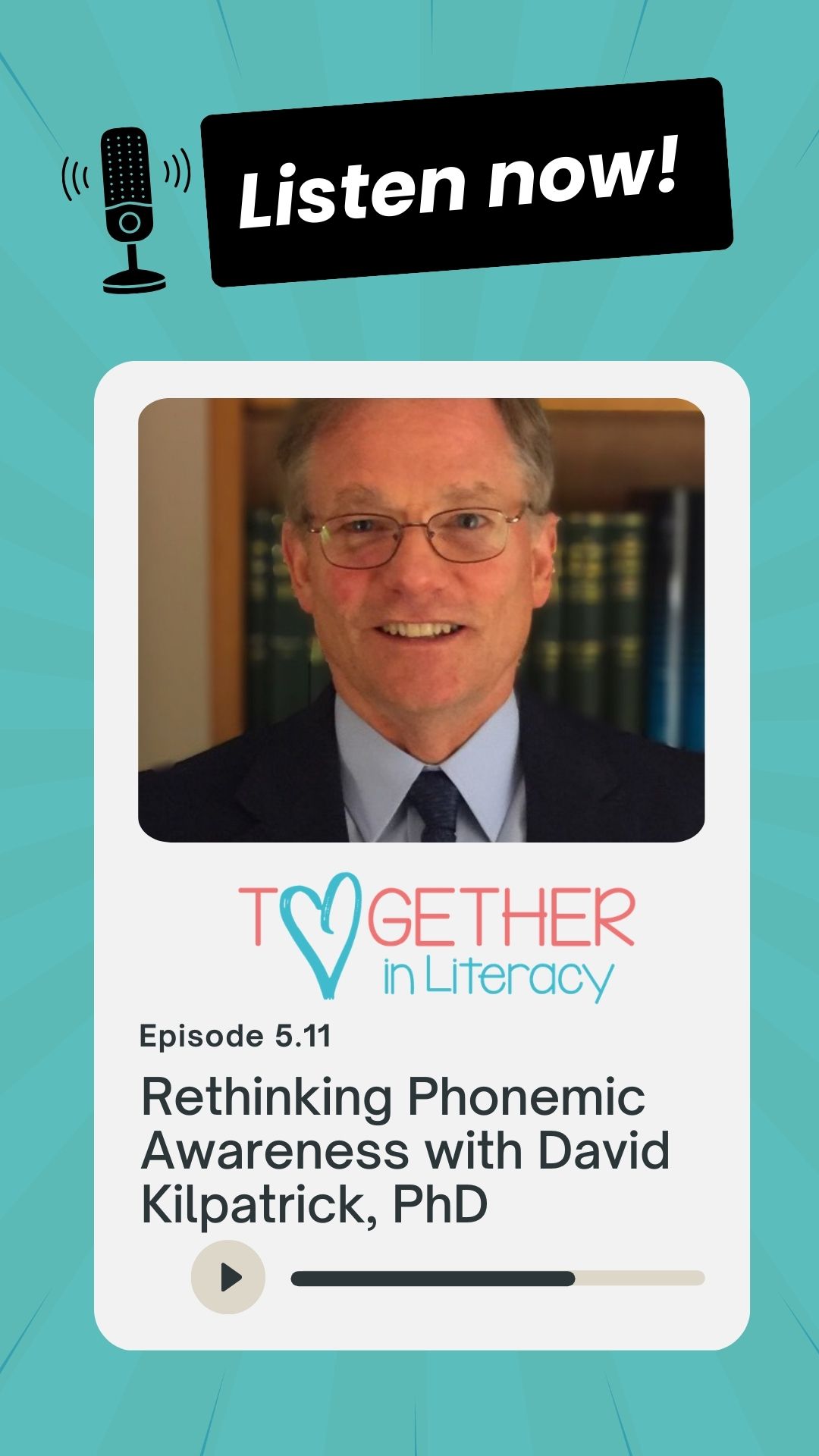
Instructional Implications
A raw score on a phonemic awareness test can be misleading. The key questions are: How fast did the student respond? And did the response look automatic, or effortful?
Even without formal timing, teachers can learn a great deal by observing response speed and ease. If a student pauses for several seconds or loses accuracy when pace increases, phonemic work is not finished.
Two core phonemic skills matter most:
- Synthesis (blending) for decoding
- Analysis and manipulation (deleting or substituting sounds) for storing words and spelling
Tasks that require manipulation, such as changing /k/ in sky to /l/ to make sly, tap deeper phonemic analysis. When students perform these tasks quickly and accurately, they are better prepared for automatic word learning.
Phonemic practice does not need to be lengthy. Brief, daily sessions can be powerful when the goal is clear: accuracy, speed, and effortless response.
When students reach that level, phonics instruction becomes far more effective because the brain can efficiently map and store new words.
For the discussion that led to this post, listen to Together in Literacy episode 5.11. You can also read Dr. Kilpatrick’s paper “The Role of Phonology and Language in Learning to Read” here.
Looking for strategies and resources?
Sign up for our newsletter for news, resources, and freebies delivered straight to your inbox.
We hate SPAM. We will never sell your information, for any reason.
