Meet Marine Scientist and Neurodiversity Advocate Aliah Banchik
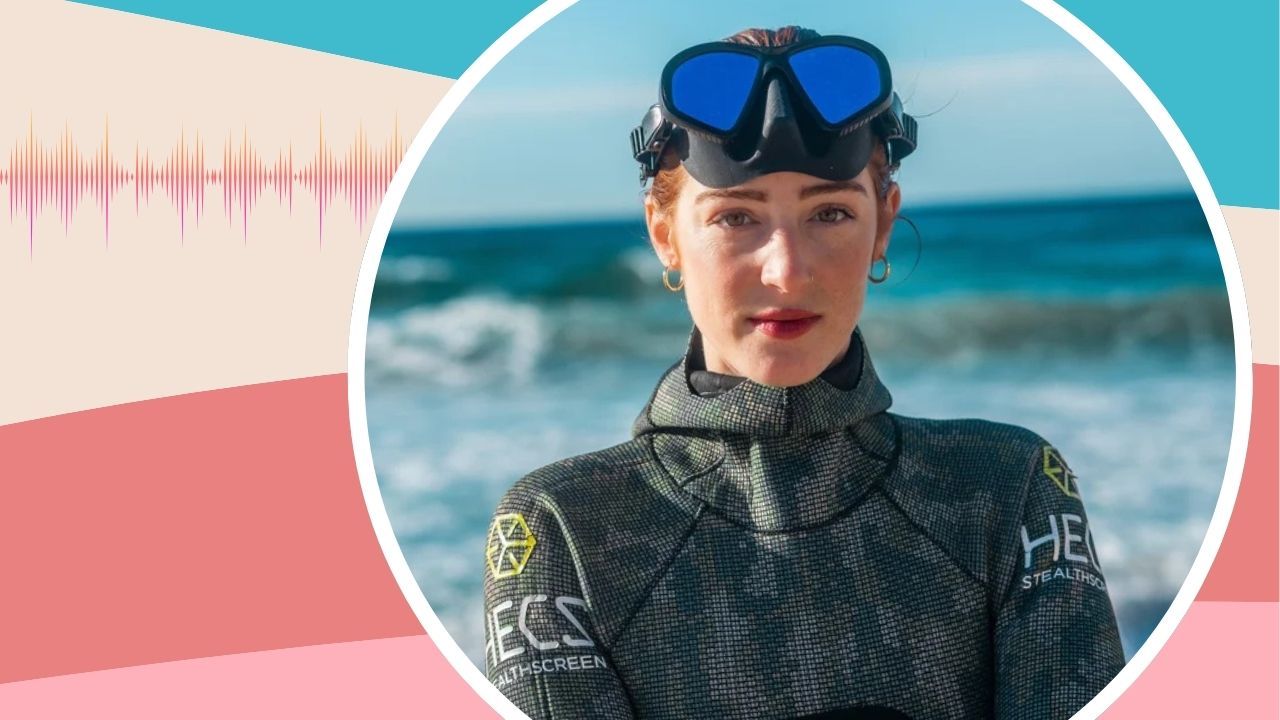
For our latest Together in Literacy episode, we interviewed Aliah Banchik, a marine naturalist, shark advocate, underwater photographer, Netflix breakout star of All the Sharks, and a powerful voice for neurodiversity. She is well known for her TEDx Talk on reframing dyslexia as a “different ability.”
Below are a few excerpts regarding her dyslexia journey and advocacy. We encourage you to listen to the full episode for a deeper dive (and some really fun additional discussions about her work with sharks!). Aliah’s responses have been edited for length and clarity.
Q: Many listeners know you from your TEDx Talk and your book My Best Friend Lexi. What inspired you to tell your dyslexia story publicly?
I was diagnosed with dyslexia around age eight, and while I knew I was struggling in school I had no idea what that meant. To me, it sounded like I was diagnosed with some kind of terminal illness, and I started to feel shame and embarrassment, and lost confidence in my academic abilities.
On the other side of that coin, I excelled at anything sports related or art related. I felt more accepted when I had art and PE, and when I had all the rest of the subjects I wanted to hide in the back corner.
I hit a point in ninth or 10th grade where I was genuinely just so defeated and upset. It wasn't a lack of effort, but nothing was working for me. And I got to a point where I was like, “All right, it's either I go to a new school and start fresh, or I could just forget everything that I've been taught in school and just try and work with my brain.” And I went with the latter, and I'm very happy I did, because that was the solution to my success. 
So I changed the way I did homework, because it took me twice as long to do it. I would start early in the morning and then do it also at night. I paired that with changing up how I studied. I stopped using long study guides and flashcards and started color coding my notes and making mind maps.
Suddenly, things changed. I went from a D or a C average to straight As, and it's been a straight A journey since then.
And that's when I realized maybe this dyslexia thing isn't an impediment. Maybe it's actually just something that I need to work with in order to succeed.
Later, I was trying to figure out something special for my common app for college and decided I could write about my dyslexia journey. I remember starting to write it, and it was from the first person: I had a challenge, and then I persevered, and now I am a good student. It was very boring. I think it was my stepdad who actually gave me the idea to call my dyslexia “Lexi” and then from there, the ball started rolling.
We got into college, so check. And then we ended up writing a children's book about it, which was amazing. And then, obviously, those are the two things that underpinned my TED talk. So now me and Lexi are homies, but it wasn't always that way.
Q: Your TEDx Talk highlights mind mapping as a game changer for you. Did someone teach you the strategy?
I thought I had figured out how my brain worked in high school. But in college, I had to try really hard again, it was all very different. There was specifically this one class that I was actually struggling to pass, so I went to the student study center. I told them I was trying everything to memorize things and it wasn’t working. There was a tutor who asked if I’d tried mind mapping and showed me visual pictures of it. I was not super amused by it, to be honest, but I literally had no other option, because I was about to fail this class. So I tried it, and it's been so good.
Q: If you could leave people with one takeaway from your dyslexia advocacy, what would it be?
That dyslexia isn’t a disability, it’s a different ability. Neurologically, people with dyslexia have the same brain structures – it’s not like we’re missing an area, or that neurotypical brains have some type of superior form. We have the same areas, we simply utilize them differently.
The follow-up to that is that reading and spelling are not the end-all, be-all measure of intellect or intelligence. But our education system, from an early age into adulthood, is based on those skills, and so as a result, dyslexic people and neurodivergent people who struggle with reading and spelling end up feeling like they are not smart, when in reality, they're some of the smartest people. We place such a heavy value and emphasis on these technical skills like reading and writing and we devalue the skills that dyslexic people are good at, like athletics and arts.
Q: You describe yourself as a neurodiversity advocate. What does that mean to you?
When I use the term neurodiversity advocate, I am trying to just bring different forms of thinking to conversations that they're not normally welcomed in, kind of like norm breaking.
Never in a million years did I think I'd be a scientist and go back to school to get a master's degree by choice. But that’s one of the things I’m most proud of now, that I was inspired by the natural world and wanted to continue to learn about it in any way, shape, or form. And that’s what brought me to my master’s in marine biology. It was very transformational to how I viewed myself and my abilities as a dyslexic and ADHD neurodivergent person. I thought I couldn’t do research, that I wouldn’t be good at it, so I was pursuing placement experience over research. But I met with a professor who told me that research is actually the most creative thing you can do, because you’re literally creating new knowledge. That flipped everything I thought about research on its head, and I ended up doing a full year of research and totally proved myself wrong.
I'd like to be living proof that neurodiverse people not only have a seat at the table when it comes to science and engineering, but we're actually some of the top dogs in that field. Even if you're struggling to do basic calculations or spell basic words, that has no impact on your actual intellectual abilities. In fact, I believe NASA actually seeks out dyslexics to hire because they have abilities that non-dyslexics simply do not possess. I just want to continue to showcase that being a scientist, being whatever you want to be…you can do that regardless of how you think.
Looking for strategies and resources?
Sign up for our newsletter for news, resources, and freebies delivered straight to your inbox.
We hate SPAM. We will never sell your information, for any reason.
