How to Use Backward Design to Build Powerful Decodable Text Lessons
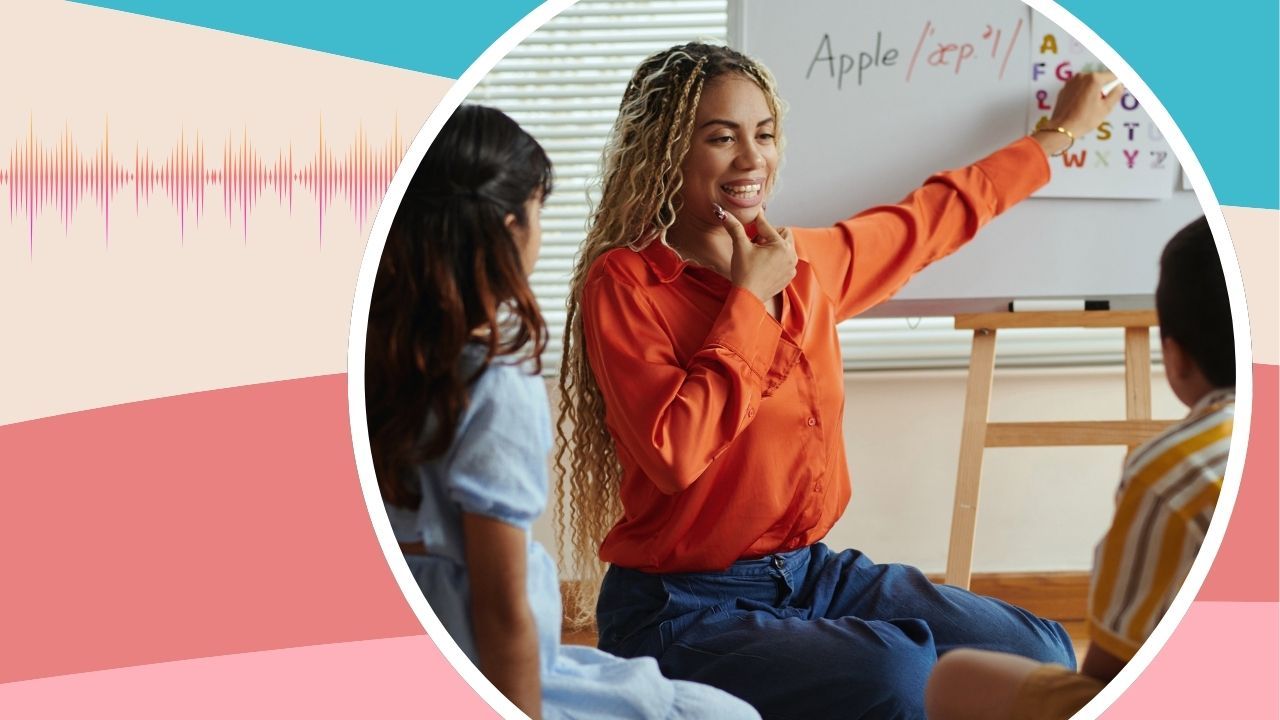
In this week’s episode we spoke to Dr. Melissa Orkin and Sarah Gannon about their book The Structured Literacy Playbook: Preplanned Lessons for Building Phonics and Fluency Skills. Among many features, the book offers a “game plan” structure that helps educators build lessons similar to how you might prepare for an athletic event – with cohesion and pre-planning that sets up students for success.
A big part of that game plan approach is backward design, where we start with a decodable text and then intentionally build every activity around that text. If you look at reading that text as the big athletic event, it means helping students get all the skills they need to really perform at that final goal.
Essentially, backward design turns decodable texts into multidimensional literacy tools, rather than just something students read at the end of a lesson.
By starting with the decodable text and building outward, you ensure:
- Every part of the lesson is relevant
- Students see connections between skills
- Instruction is efficient and cohesive
- Practice opportunities feel purposeful, not random
Here’s how to build a lesson plan using backward design:
1: Choose the Decodable Text First
Your decodable text is the anchor of the lesson. Pick a text that aligns with the phonics pattern your students have already been taught and are ready to practice. Once you’ve selected the text, everything else flows from it.
2: Identify the Instructional Targets
Scan the text with a teacher’s eye. Backward design means you determine what students need based on what they’ll encounter in the text. Look for opportunities to practice phonemic awareness, phonics, vocabulary, syntax, and fluency.
3: Build Phonemic Awareness Activities From the Text
Instead of using random words, pull your PA activities directly from the decodable text.
For example, if the text includes snap, slip, and step, you can design:
- Oral blending: /s/ /l/ /ɪ/ /p/
- Phoneme manipulation: Change /slip/ → /slid/ → /slide/
- Segmentation practice: Have students tap out each sound before reading
4: Design Phonics Practice That Sets Students Up for Success
Use your text to identify:
- The primary phonics skill (e.g., short a, blends, CVCe)
- Review patterns students will encounter
- Any tricky orthographic moments worth previewing
Create a short, explicit phonics mini-lesson using words from (or structurally similar to) the text. The key is alignment: students practice the skills they’ll need to decode this particular passage.
5: Pre-Teach (or Reinforce) Vocabulary
Decodable texts sometimes include words that are fully decodable but new for students.
Try:
- Brief, student-friendly definitions
- Quick sketches or gestures
- Example sentences that build meaning
- A fast “turn and talk” using the new word
6: Pull Syntax and Language Work from the Passage
This step is often overlooked, but syntax instruction is powerful.
Look for:
- Compound sentences
- Dialogue
- Interesting punctuation
- Unusual phrasing
- Opportunities for sentence combining or deconstruction
7: Plan the Reading Routine
Now bring it all together.
Your reading could include:
- A brief teacher preview (“Listen for the words with the /sl/ blend.”)
- Whisper reading or partner reading
- A second read for fluency or expression
- A quick comprehension check tied to meaning, sequence, or character action
8: Close the Loop with Connected Practice
Finish with a short task that reinforces the lesson’s focus, like writing with the target pattern, sorting words from the text, or dictating sentences that mirror its structure.
Looking for strategies and resources?
Sign up for our newsletter for news, resources, and freebies delivered straight to your inbox.
We hate SPAM. We will never sell your information, for any reason.
