Beyond Accommodations: Helping 2e Kids with Dyslexia Thrive

If you’ve ever heard a child described this way…
- “They’re so bright, there’s no way they’re dyslexic.”
- “They’re getting A’s—how could they possibly need support?”
- “They’re clearly struggling; maybe they’re just not trying hard enough…”
…you’ve probably met a twice-exceptional learner.
In Episode 5.14, we talked with Dr. Rosine Dougherty about twice-exceptional (2e) students—kids who are both gifted and have a disability such as dyslexia, ADHD, or autism. These students are often misunderstood, because adults see only one side of the picture at a time: the strengths or the challenges.
When we ask our recurring question, “What do students with dyslexia really need?” how does that change when they’re twice exceptional?
Intervention Is Essential—but It’s Not the Whole Story
Students with dyslexia need explicit, systematic, structured literacy instruction. That kind of specialized teaching is essential.
For twice-exceptional students, however, it is only part of the picture.
These students are both gifted and dyslexic, and that combination matters. Their strengths can obscure their challenges, while their challenges can also obscure their strengths. In many schools, gifted education and special education are treated as separate domains, which can make it difficult to fully understand or support students whose learning profiles span both.
Helping 2e students with dyslexia move beyond simply coping requires a more integrated approach—one that recognizes the full complexity of how they learn. They are not gifted despite dyslexia or dyslexic despite giftedness. They are both, and effective support must account for both realities at the same time.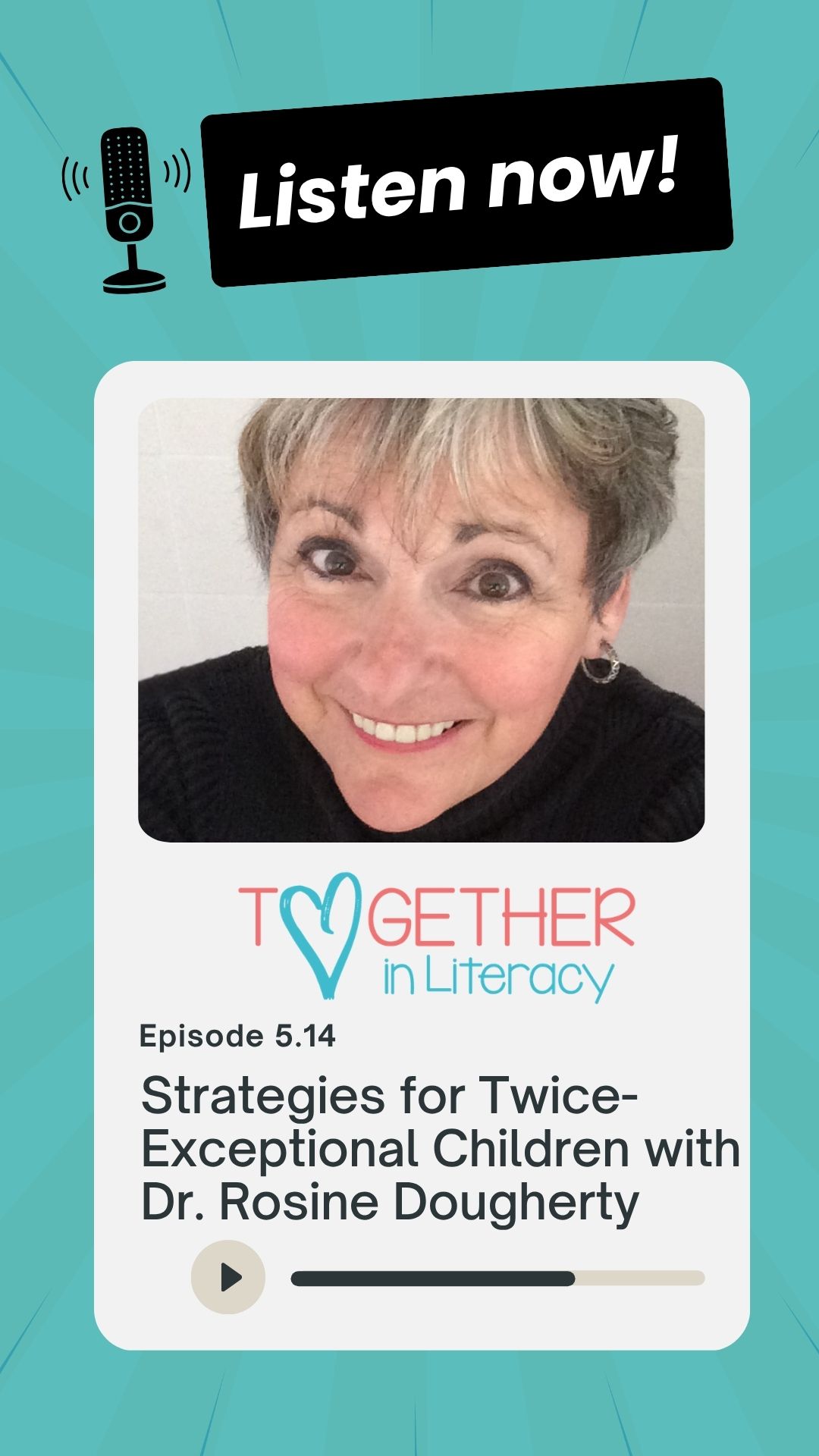
What 2e Students with Dyslexia Really Need
Twice-exceptional students often need a combination of academic, emotional, and practical support that reflects the full complexity of how they learn.
1. Explicit, Flexible Instruction
These students benefit from structured, cumulative, and diagnostic literacy instruction that is responsive to their specific learning needs. Often, that instruction is most effective when delivered in small groups or one-to-one settings, where teaching can be adjusted to the student’s pace rather than tied too rigidly to a calendar or pacing guide.
It is also important to distinguish between intervention and accommodation. Accommodations can provide access, but they do not replace the need for direct instruction. Students still need to be taught.
2. Recognition of Incremental Progress
Progress for students with dyslexia is often uneven. A skill that seems secure one day may feel much less accessible the next. That inconsistency can be frustrating for both students and adults, but it is a normal part of the learning process.
Growth often happens in small, meaningful steps. A student who sustains attention for longer than usual, writes one clear sentence independently, or uses a strategy more consistently is making real progress. When adults notice and name those developments, students are more likely to stay engaged in work that is genuinely demanding. This is called successive approximation.
3. Support Across the Full Literacy System
Dyslexia rarely affects only one area of learning. A student may have sophisticated oral language, rich ideas, and strong reasoning skills while still struggling with decoding, spelling, handwriting, written expression, or organization.
Because of that, support needs to extend across the broader literacy system. Reading, writing, spelling, and comprehension are interconnected, and students often need help in more than one of these areas at the same time. Effective support also creates space for strengths to be visible alongside areas of difficulty, rather than treating the student only through a deficit lens.
4. Accommodations That Reduce Output Barriers
For many dyslexic 2e students, the issue is not a lack of understanding but the difficulty of demonstrating what they know through conventional formats.
Supports such as text-to-speech, speech-to-text, audiobooks, and accessible digital text can make academic content more available. Similarly, allowing students to respond orally, through projects, or through visual representations can provide more accurate ways of assessing knowledge and understanding.
These supports do not reduce the intellectual demand of the work. Instead, they reduce unnecessary barriers between a student’s thinking and the form in which that thinking is expected to appear.
5. Protection from Avoidable Humiliation
Some common classroom practices can be especially harmful for students with dyslexia, particularly when those students are already working hard to conceal difficulty.
Practices such as round-robin reading, public comparisons of reading levels, or requiring students to read their writing aloud without choice can create unnecessary stress and undermine confidence. More supportive alternatives might include reading in pairs or small groups, inviting only voluntary readers, or allowing a student to contribute by leading discussion or summarizing ideas rather than reading unfamiliar text aloud on demand.
Preserving dignity should be considered a basic part of educational access, not an optional courtesy.
6. Mental Health Support as Part of the Learning Plan
The emotional demands placed on 2e students with dyslexia are often substantial. Many spend the school day masking, compensating, and working harder than others realize just to keep up. As a result, they may return home exhausted, irritable, or emotionally overwhelmed. They may also struggle with perfectionism, anxiety, or an unstable self-concept shaped by conflicting internal messages about being both highly capable and persistently challenged.
Support is most effective when emotional well-being is treated as part of the educational plan rather than as a separate concern. This may include collaboration with counselors or psychologists, as well as home routines that allow time to decompress after school.
7. Early and Ongoing Self-Advocacy
Students also benefit from guided opportunities to understand and communicate how they learn best. That includes being able to explain which tools are helpful, what kinds of support make academic work more accessible, and what they are entitled to through an IEP or 504 plan.
Self-advocacy often begins in small ways, such as asking for directions to be read aloud, but over time it can grow into fuller participation in educational decision-making. Eventually, it may include emailing teachers, contributing to support meetings, or navigating disability services in college.
When students can articulate what they need, they are not being difficult. They are developing an essential skill for long-term independence.
To go deeper into twice exceptionality and dyslexia, listen to Episode 5.14 of the Together in Literacy podcast with Dr. Rosine Dougherty, and explore her book Strategies for Twice Exceptional Children: A Practical Resource Toolkit Supporting Bright Minds with Complex Needs for concrete tools and strategies.
Looking for strategies and resources?
Sign up for our newsletter for news, resources, and freebies delivered straight to your inbox.
We hate SPAM. We will never sell your information, for any reason.
